Hare Krishna Kirtan

Hinduism — Gaudiya Vaishnavism

Hare Krishna
Kirtan हरे कृष्ण कीर्तन

Dedicated to Sri Krishna and Sri Rama, through the Hare Krishna Maha Mantra

A 500-year-old tradition of singing the divine names together — where one voice leads and every heart follows. Open to all. No preparation needed.

Book for your occasion

हरे कृष्ण हरे कृष्ण, कृष्ण कृष्ण हरे हरे
हरे राम हरे राम, राम राम हरे हरे

Hare Krishna Hare Krishna, Krishna Krishna Hare Hare
Hare Rama Hare Rama, Rama Rama Hare Hare

What people say after their first kirtan

I felt as if a weight I had been carrying for years was suddenly lifted.
Joyful and calm at the same time — I had never felt both together like that.
I didn't know the words. I still couldn't stop singing.
All my worries simply disappeared. What remained was peace.
I finally found what I had been searching for.

What is Hare Krishna Kirtan?

Hare Krishna Kirtan is the congregational singing of the Maha Mantra — considered in the Vedic tradition to be the most powerful mantra for this age. The word kirtan means to glorify the Divine through song. The Maha Mantra is the song.

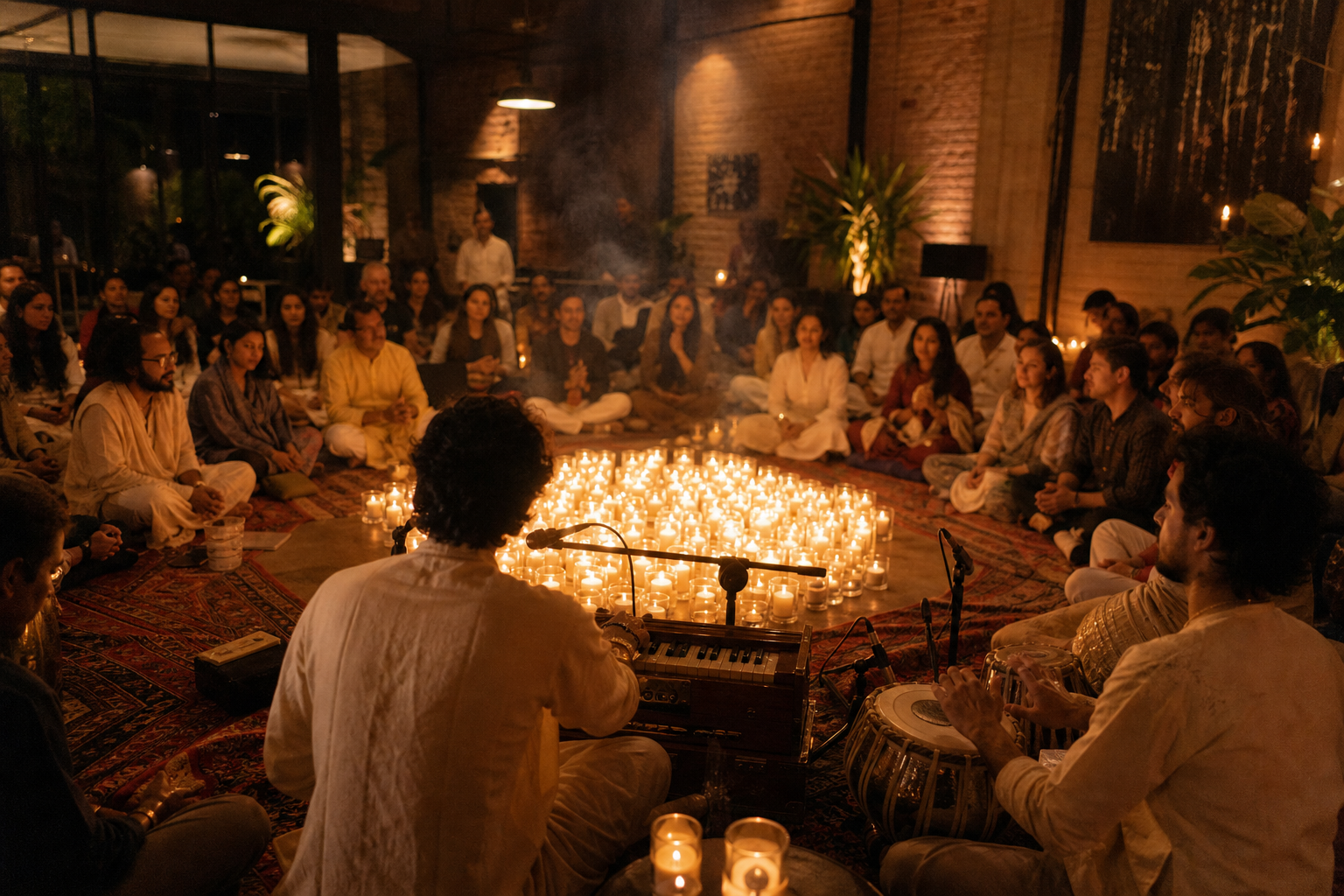
It is practised as call-and-response. The lead artist sings a line. The gathering sings it back. This exchange — between one voice and many — creates something that neither could create alone.

You do not need to be religious to participate. You do not need the right pronunciation or any preparation. The tradition holds that the names themselves carry the power, and all you need to do is receive them sincerely.

In the Gaudiya Vaishnava understanding, the Divine name is not merely a word pointing to God — it is God himself in sound form. Chanting the Maha Mantra is therefore direct communion with Krishna, capable of cleansing the heart, dissolving the ego, and awakening the soul's deepest longing. Srila Prabhupada taught that in this age — Kali Yuga — sankirtan, the congregational chanting of God's names, is the most accessible and powerful spiritual practice available to every human being, regardless of background or belief.
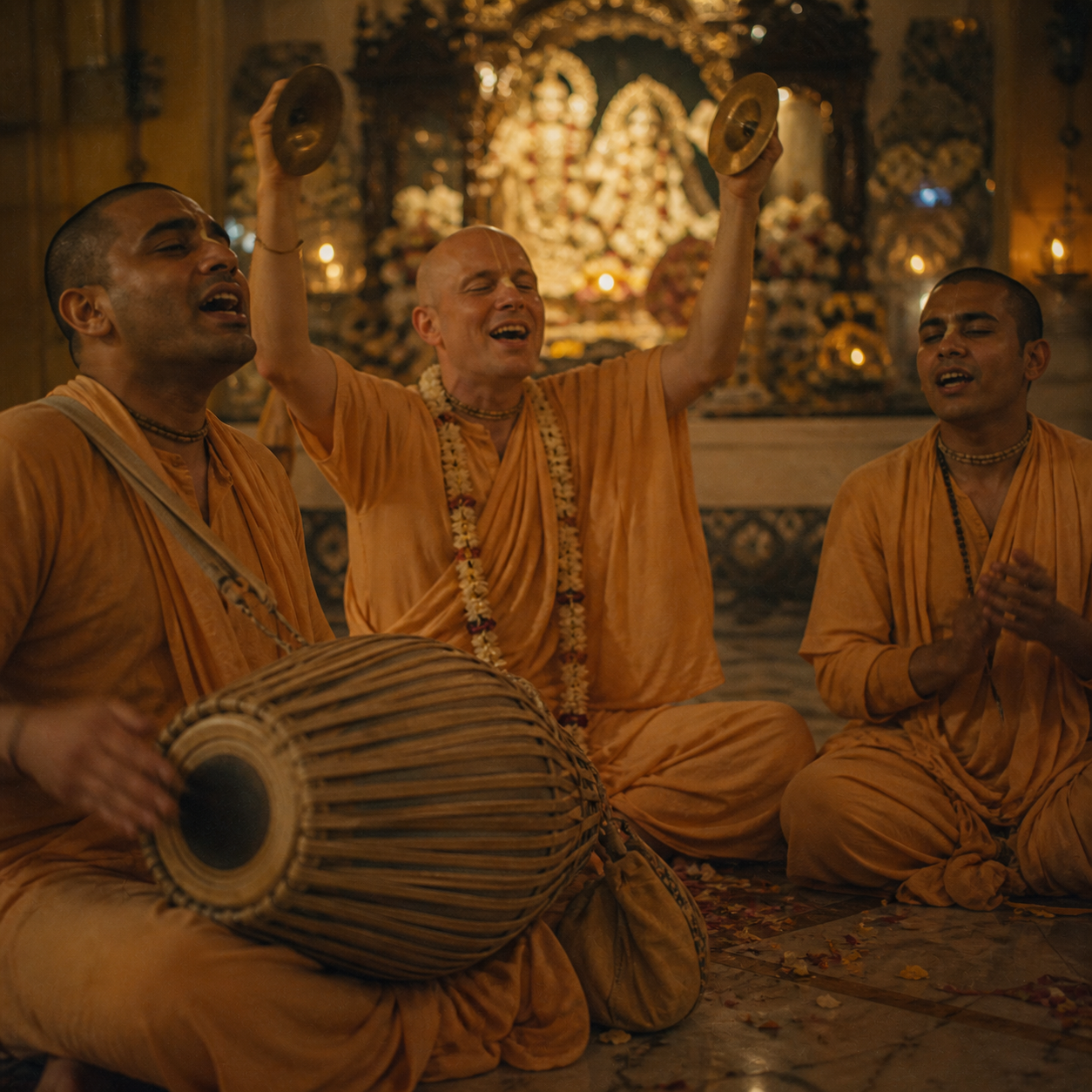
Live kirtan video

Hare Krishna Kirtan is defined by the exclusive, repeated chanting of the Maha Mantra in call-and-response — no varied lyrics, no mixed compositions. Its energy typically moves from slow and meditative to joyfully ecstatic, with the mridanga and kartal carrying devotees deeper as the kirtan builds.

हरे Hare The divine energy that draws the soul toward God
कृष्ण Krishna The all-attractive, the source of all joy
राम Rama The reservoir of divine bliss, the one who fills the heart

What to expect

What happens
in a kirtan

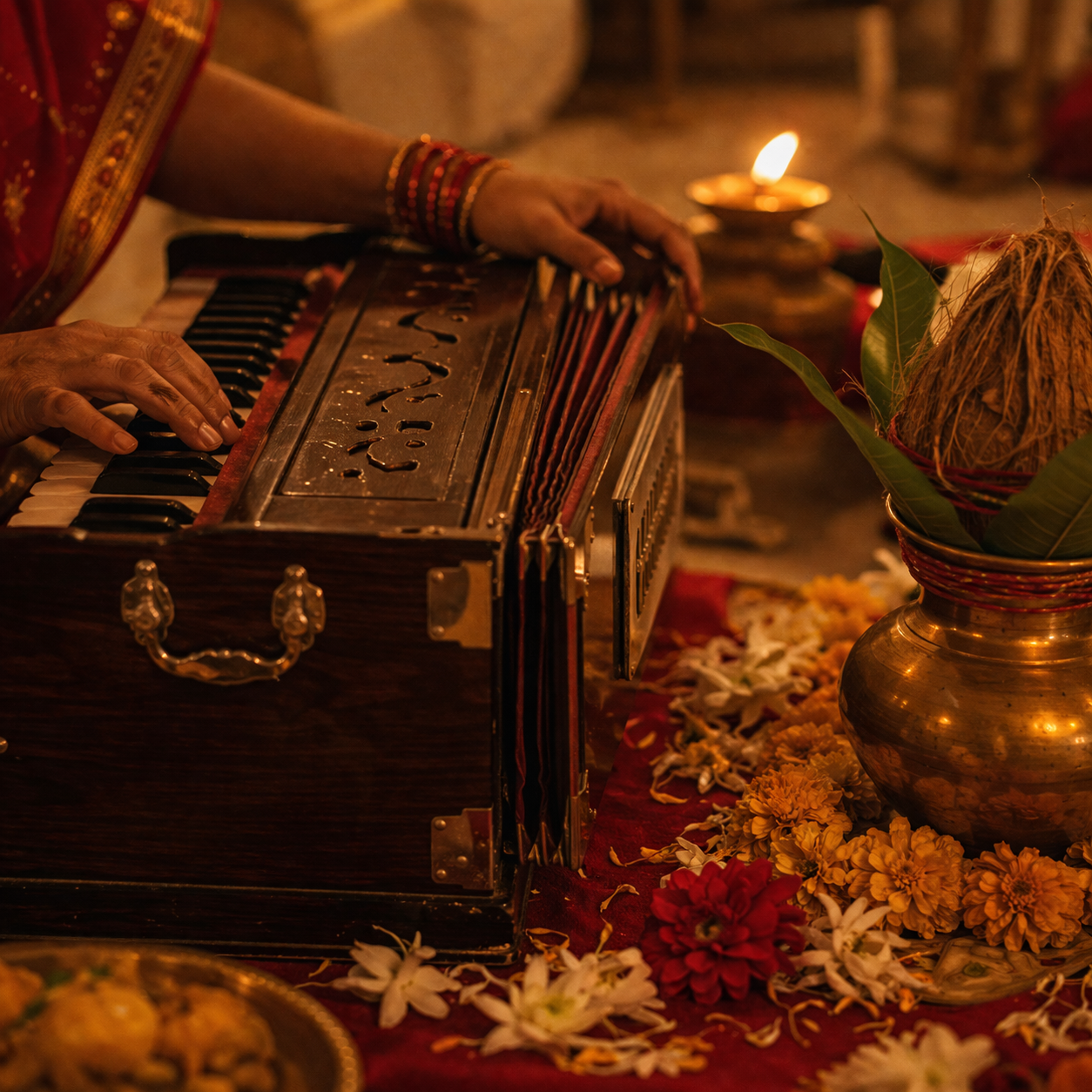
A Hare Krishna Kirtan begins gently. The artist opens with a slow melody on the harmonium, setting a mood of quiet devotion. The mridanga joins softly. The mantra is introduced line by line.

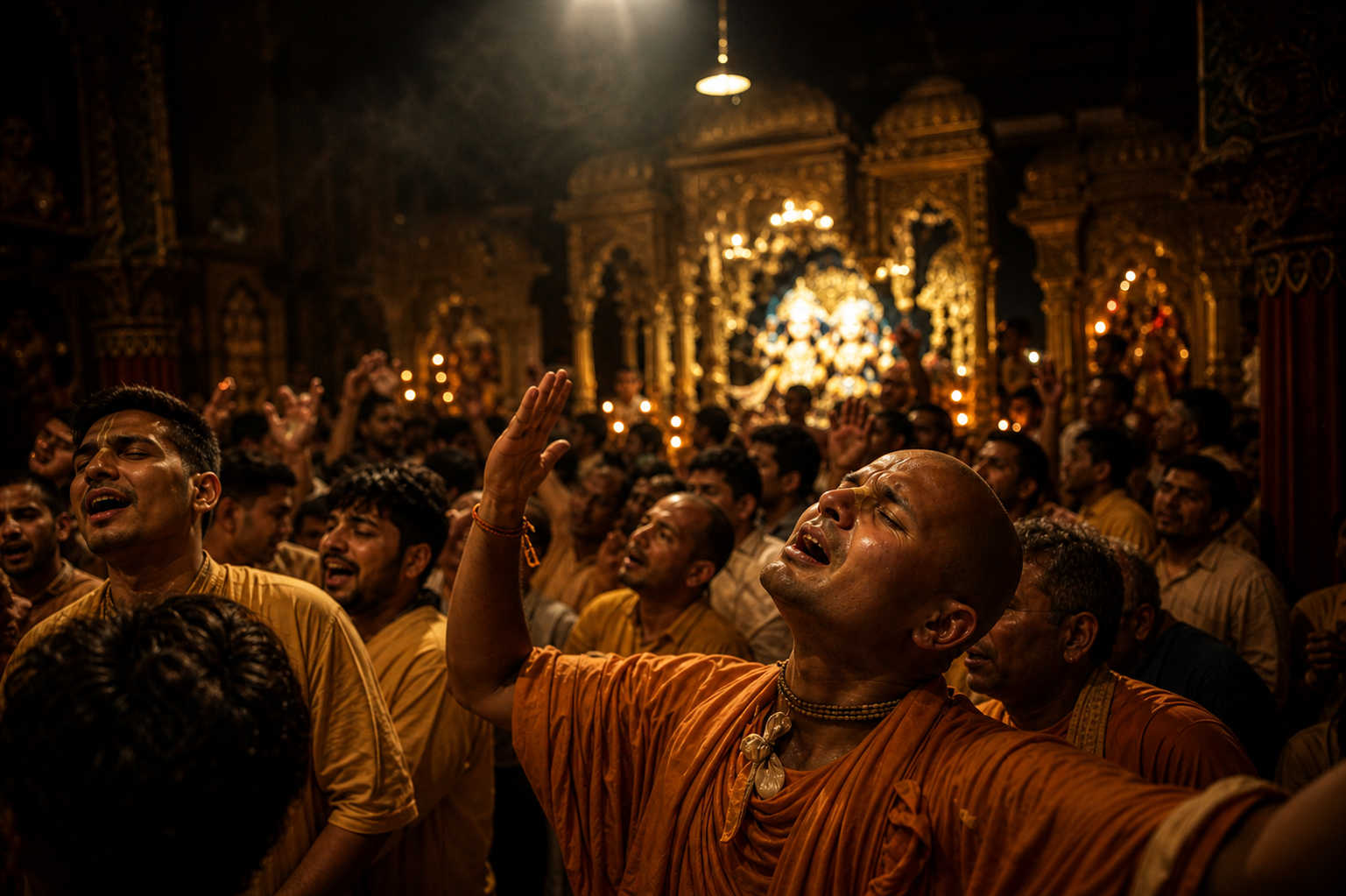
As the gathering begins to respond, something in the room starts to shift. The tempo builds gradually — naturally, the way a river finds its pace. At the peak, voices are fuller, hands are moving, and the separation between those who came to listen and those who came to sing has quietly dissolved.

Then the kirtan slows. It settles. It ends in stillness.

Most first-timers say the same thing afterwards: they are surprised by how natural it felt, and how different the room feels from when they first walked in.

Fully participatory — devotees repeat the mantra after the lead chanter, clap, and often dance in ecstatic joy. There is no observer role in this tradition. Even a newcomer is invited simply to listen and let the sound do its work.

Temple sessions typically run 30–90 minutes. Festival kirtans can continue for several hours; special kirtan marathons may go through the night.

Occasions

What people invite it for

Wedding kirtan
Wedding & Sangeet
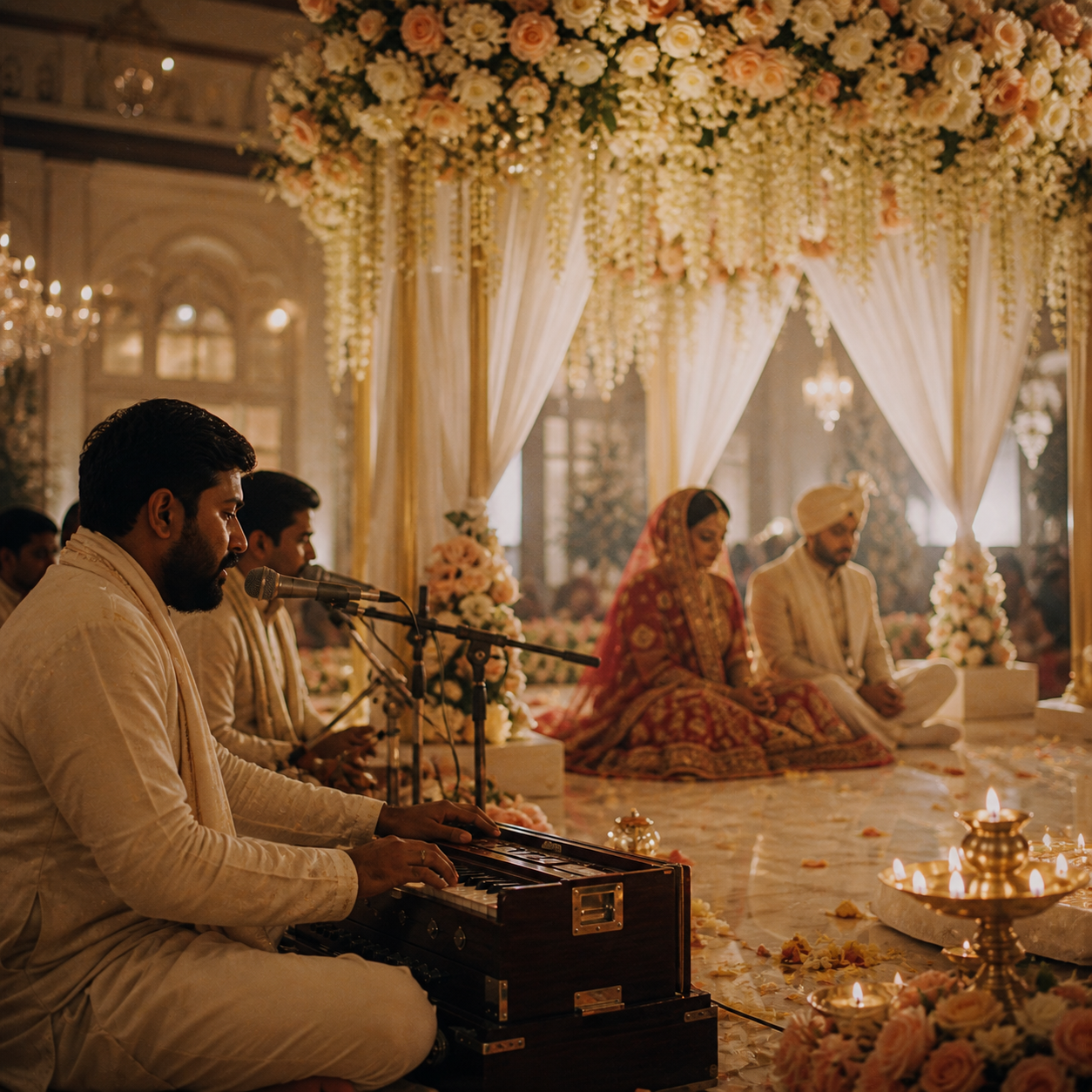
Many couples are now opening their wedding celebrations with live kirtan. Guests who have never chanted before find themselves singing within minutes.
Griha Pravesh kirtan
Griha Pravesh
The first ceremony in a new home. Kirtan fills the space with sacred sound before anything else enters.
Janmashtami kirtan
Janmashtami
The birthday of Lord Krishna. Many families mark it with an extended or overnight kirtan session.
Birthday and anniversary kirtan
Birthday & Anniversary
A meaningful addition to the usual celebration. Guests say it becomes the part of the evening they remember longest.
Society satsang kirtan
Society Satsang
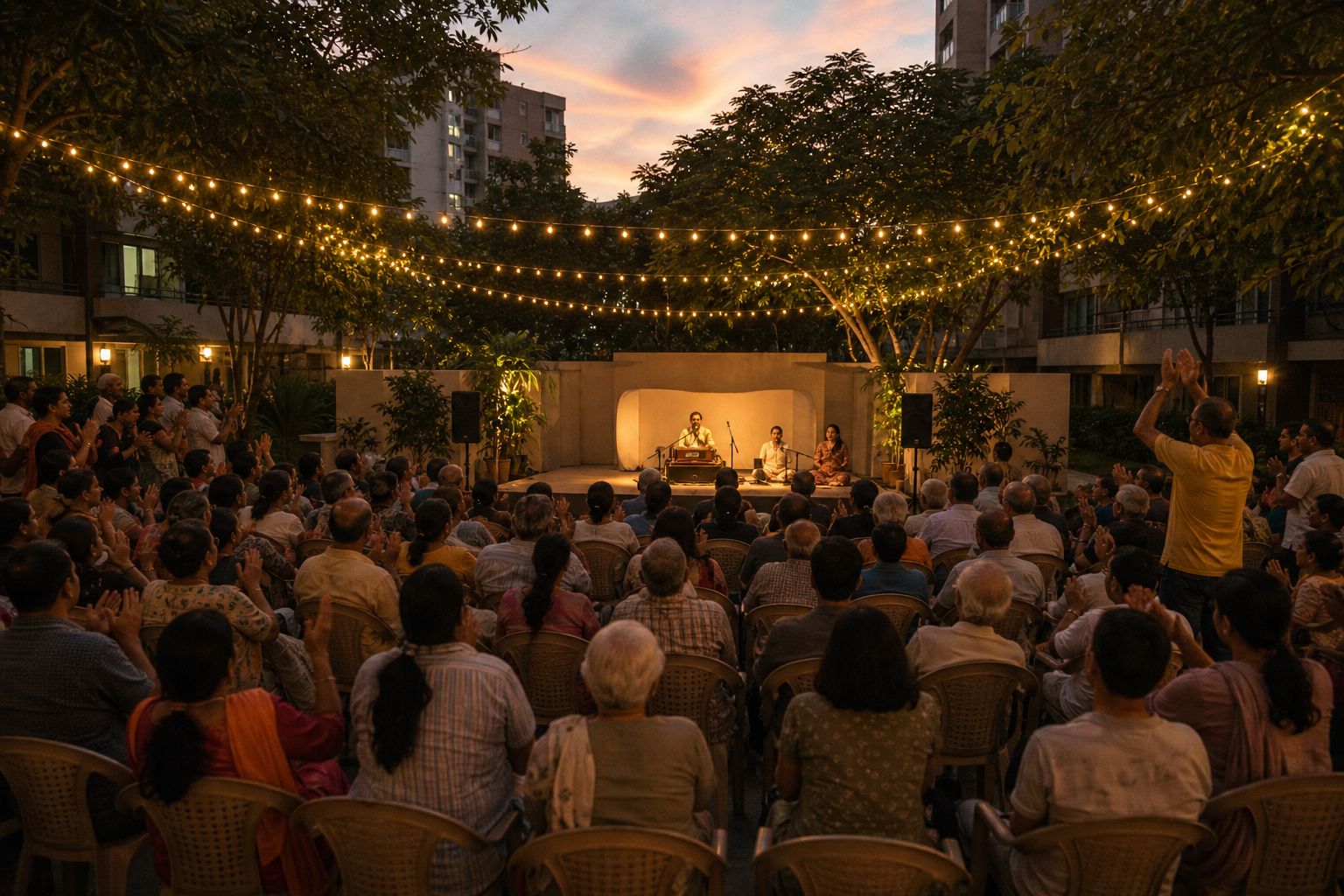
Neighbours who rarely speak find themselves singing together. It builds community in a way that is hard to manufacture otherwise.
Home session kirtan
Home Session
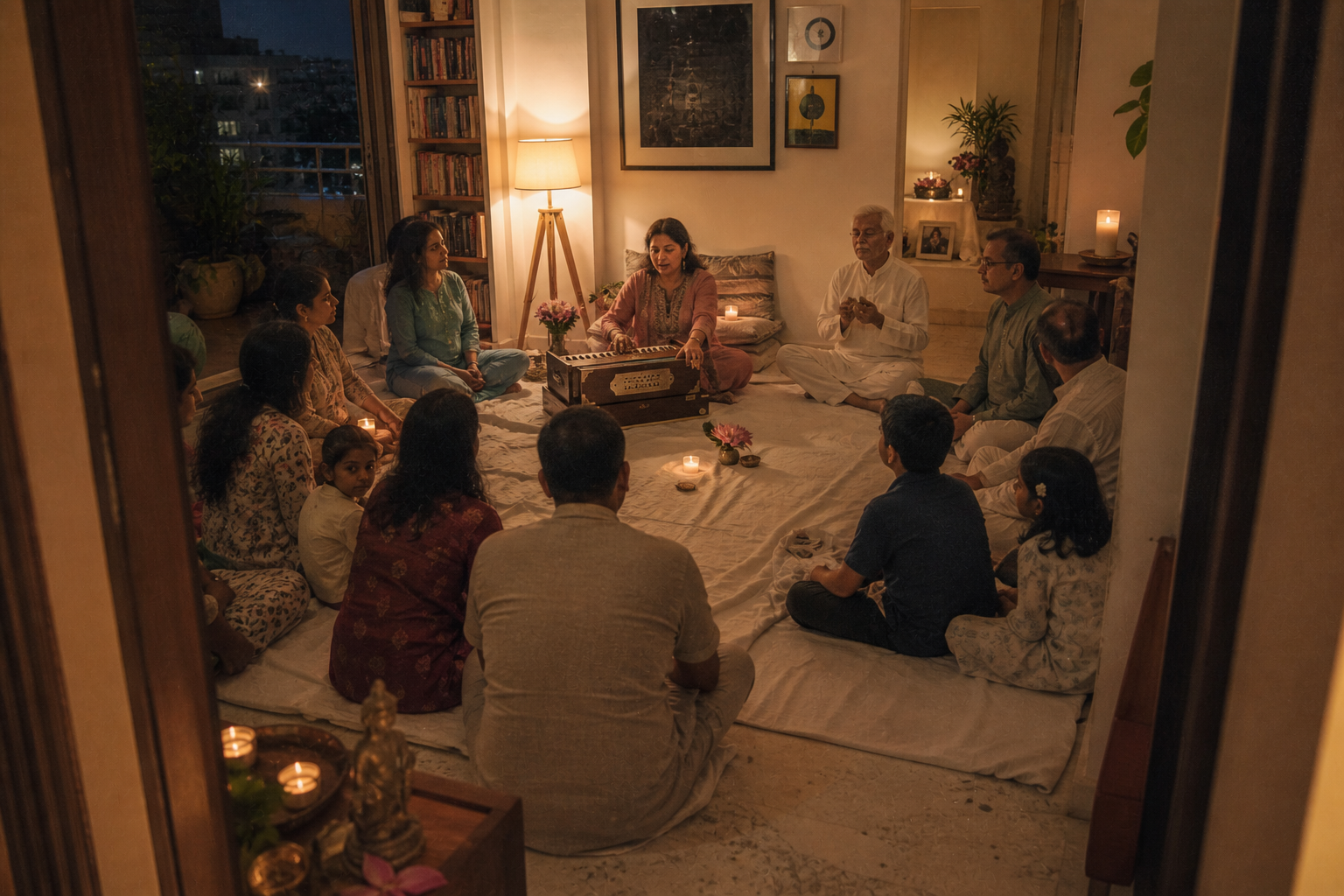
An intimate kirtan in your living room for family and close friends. One of the most personal ways to experience this tradition.
New Year
Midnight arrives with the Maha Mantra instead of a countdown. Those who attend describe it as the most meaningful New Year they have ever had.
Home Puja & Satyanarayan Katha
Kirtan before a katha prepares the heart. It settles the room and shifts the atmosphere in a way that incense and flowers alone cannot.

The Music

Three instruments.
One sound.

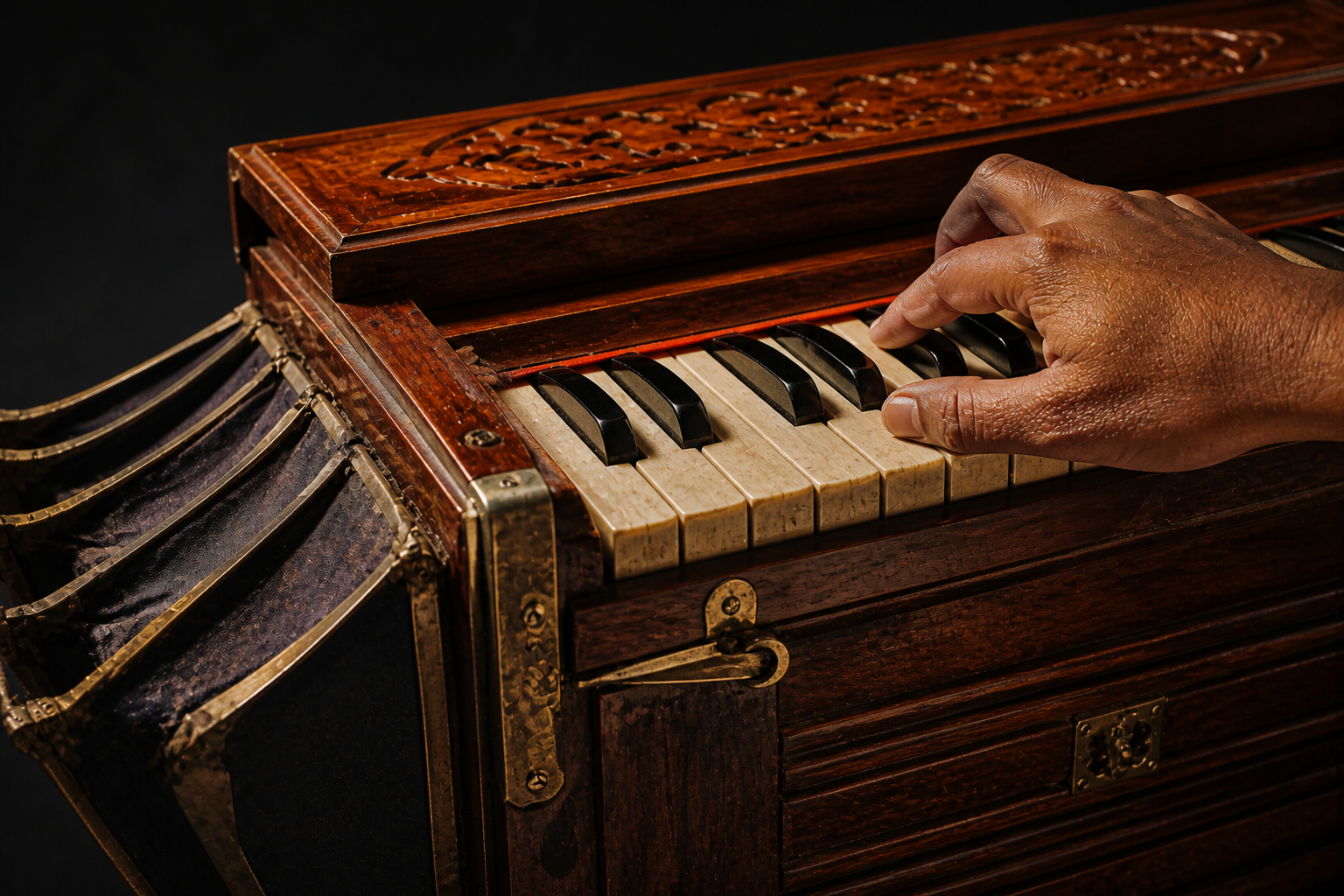
Harmonium
Harmonium
A hand-pumped keyboard instrument that carries the melody of the mantra. It anchors the sound and guides every voice in the room.
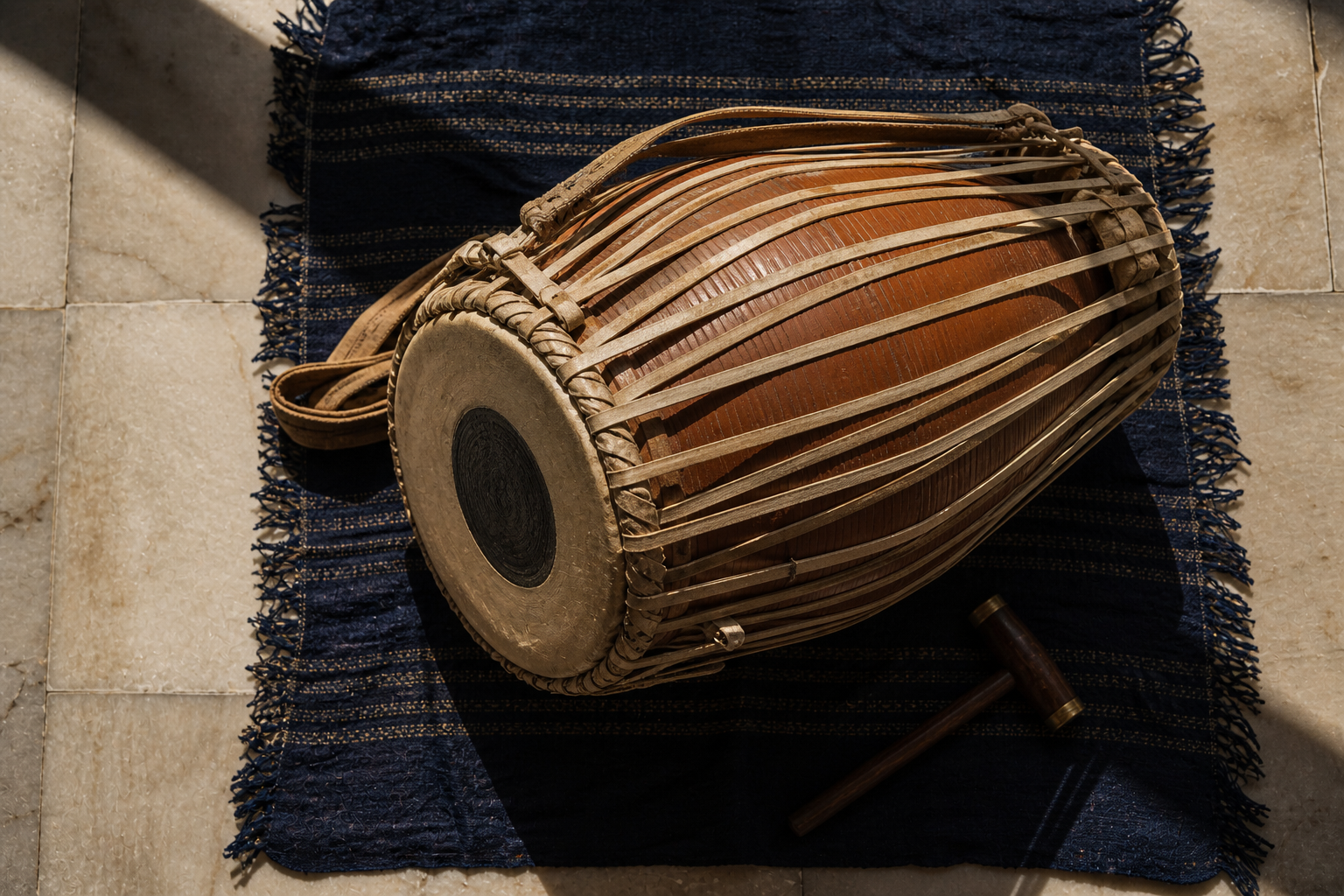
Mridanga
Mridanga
A two-headed clay drum that has accompanied this tradition since the time of Chaitanya Mahaprabhu. As the kirtan builds, it is the mridanga you feel most in your body.
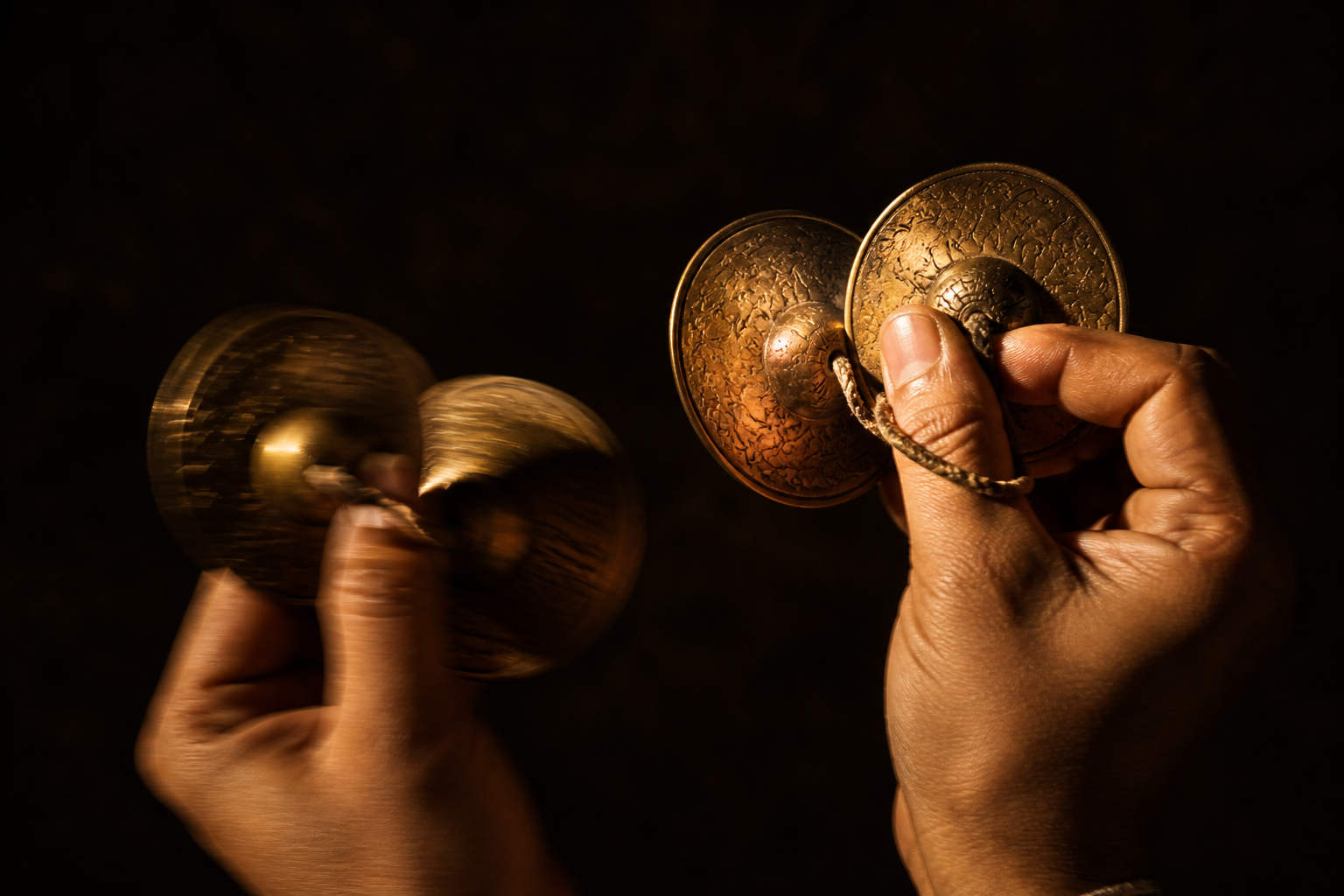
Kartals
Kartals
Small brass hand cymbals. Artists often pass a pair to someone in the gathering — and the moment you hold them, you are no longer a guest. You are part of the kirtan.

Where it comes from.
What the research says.

1486
Bengal

Chaitanya Mahaprabhu teaches that congregational chanting of the divine names is the most direct spiritual practice available to ordinary people — not just scholars or priests, but everyone.

1966
New York

Srila Prabhupada carries this tradition from India to New York and founds ISKCON. Today the Maha Mantra is sung in over 100 countries.

Today

ISKCON Chowpatty's annual New Year Eve kirtan fills to capacity every year. Midnight arrives with the Maha Mantra. Those who attend describe it as the most meaningful New Year they have ever had.

Neurology

A neurologist at Henry Ford Hospital found his brainwaves showed near-complete stillness after chanting — a level of quiet he described as unheard of without medication.

Psychology

A 2025 study of 291 regular chanters found consistent positive associations between the practice and happiness, peace of mind, and emotional resilience.

Physiology

Regular chanting is associated with reduced cortisol, increased serotonin and oxytocin, and activation of the body's parasympathetic — rest and recovery — response.

The ancient texts described these effects centuries ago. Science is now arriving at the same place.

Hare Krishna Kirtan Artists

"At a concert, you watch.
At a kirtan, something in you wakes up."

Key terms

Maha Mantra

The sixteen-name mantra — Hare Krishna Hare Krishna, Krishna Krishna Hare Hare, Hare Rama Hare Rama, Rama Rama Hare Hare — considered the great mantra for spiritual liberation in this age

Sankirtan

Congregational chanting of the Divine names; the recommended spiritual practice of Kali Yuga according to the Chaitanya tradition

Harinama

Taking the Lord's names into the world through street kirtan — making the Maha Mantra freely available to all

Kirtaniya

The lead chanter who holds the melody, builds the energy, and carries the gathering deeper into the mantra

Mridanga

The barrel-shaped clay drum that anchors the rhythmic heartbeat of Gaudiya kirtan

Prabhupada

Srila A.C. Bhaktivedanta Swami Prabhupada, who brought Hare Krishna kirtan to the West and founded ISKCON in 1966

Pronounced: huh-ray krish-nuh keer-tun
Also known as ISKCON KirtanGaudiya KirtanMaha Mantra KirtanVaishnava SankirtanHare Krishna Chanting

FAQ

Frequently asked questions

Book a Hare Krishna
Kirtan

Share a little about your occasion — the date, the gathering, what you have in mind — and we will connect you with the right artist.

Book Now Browse all Hare Krishna Kirtan artists →